The $500,000 Blood Pressure Lie: Why Big Pharma Buried Dr. Sanjay Gupta's Arterial Cement Discovery for 30 Years — Until Mick Jagger Used It to Naturally Restore His Blood Pressure
I spent more than two decades covering stories about health, longevity, and aging for this magazine. Cardiovascular disease. High blood pressure. The slow, silent way hypertension changes the lives of millions of families every year.
I thought I had seen every possible angle of this condition. I was wrong.
Nothing in my twenty years here prepared me for the conversation I had last month with Karis Hunt Jagger.
"I was so angry," Karis told me, her voice cracking on the other end of the line. "We watched my father struggle for years. We tried every doctor, every medication, every clinic. Losartan. Lisinopril. Amlodipine. Hydrochlorothiazide. Nothing worked for long. And the whole time—the whole time—the answer was sitting in a kitchen cabinet on the other side of the world. They never told us. Nobody told us."
So, if you're noticing that your blood pressure is becoming harder and harder to control—the numbers that refuse to come down, the pills that seem to work less and less, the concern on your family's faces every time you check your blood pressure—I need you to read every line of this story carefully.
You are NOT alone. And it is NOT your fault.
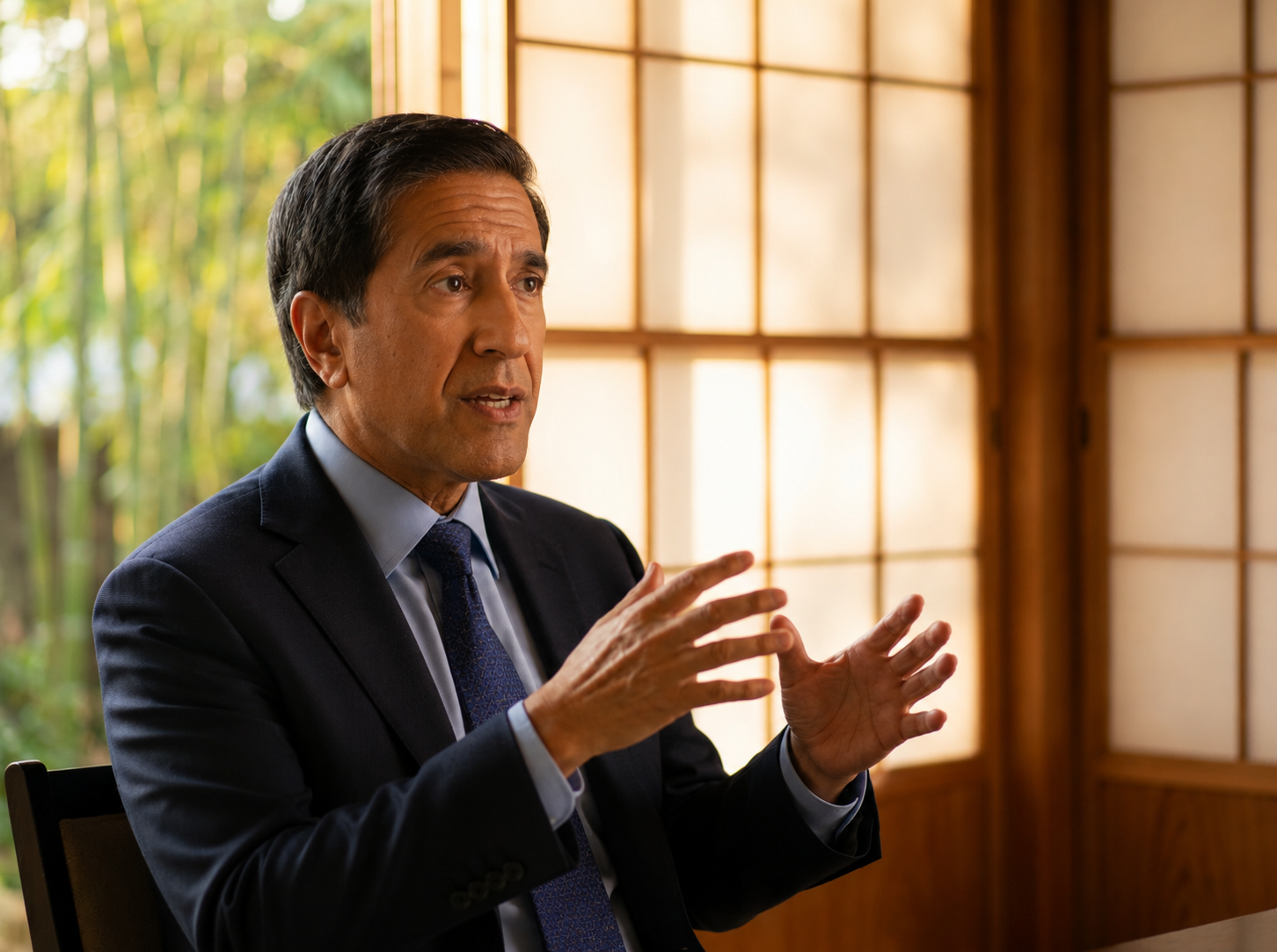
After Karis Jagger's story went public, the man who reached out to AARP was the celebrities' doctor: Dr. Sanjay Gupta.

In 2020, his wife, Rebecca, suffered a heart attack despite faithfully following every medical recommendation and hypertension treatment for years. In the years that followed, he devoted his efforts—and a significant portion of his personal fortune—to a single mission: discovering what had nearly taken his wife's life.
It was during that investigation that Dr. Gupta turned to someone he had admired for decades: Dr. Mehmet Oz. Throughout his career, Dr. Oz had interviewed some of the world's leading cardiovascular experts and followed research that most physicians never encounter. But as he brought all of that evidence together, he identified a striking pattern—a mechanism that, according to him, explained why millions of people continued to struggle with high blood pressure despite following their treatments correctly.
The two men spent months reviewing the research, comparing clinical studies, laboratory findings, and data published by universities around the world. And the deeper they went, the clearer it became that every piece of evidence pointed to the same conclusion: the true cause of hypertension might never have been what millions of people had been led to believe.
It was this discovery that Dr. Gupta chose to reveal publicly for the first time in this report. What Dr. Gupta confirmed to us on camera—and what the 2025 Nobel Prize Committee confirmed when it nominated him for the Nobel Prize in Physiology or Medicine just a few weeks later—is, according to this account, the reason the pharmaceutical industry buried his work for three decades.
A single American diagnosed with high blood pressure generates approximately $500,000 in pharmaceutical revenue over the course of the disease. A cured patient generates zero. That is the equation that determined what the world would be allowed to know.
AARP sent Maria Shriver—NBC News Special Correspondent, who lost her own father, Sargent Shriver, to a heart attack in 2011 and has spent the last two decades as one of America's most outspoken advocates for awareness of cardiovascular disease—to Dr. Sanjay Gupta's clinic.
The full interview is published below. I am publishing it in its entirety because, frankly, I don't know how much longer it will be allowed to remain online.
Maria Shriver: Dr. Gupta, for decades, millions of Americans have been told that high blood pressure is caused by too much salt, aging, or simply genetics. You say that explanation is incomplete. What is really happening inside these people's arteries?
Dr. Gupta: Excess salt, aging, and even fatty plaque are not the true causes of high blood pressure. They are merely markers. For decades, people were told that plaque was the real cause of hypertension. But plaque is only a consequence of a process that began much earlier. We call this process Arterial Cement. It enters the body silently through food and water. Over time, it gradually builds up along the walls of the arteries, making them stiffer and less able to expand naturally with each heartbeat. This process takes place over many years without causing any noticeable symptoms. By the time blood pressure finally begins to rise, Arterial Cement has already been present for a long time. Fatty plaques appear later. They do not start the problem. They simply reveal that this silent process has been happening all along.
Maria Shriver: If Arterial Cement has always been present in food and water... why did cases of high blood pressure explode only in the last few decades?
Dr. Gupta: Between 1970 and 1990, cases of high blood pressure surged across the United States. Genetics doesn't change that quickly. Population aging doesn't happen at that pace either. What changed was the environment we began living in. Over the past few decades, ultra-processed foods became a regular part of everyday life. The water we drink, the food we eat, and the modern lifestyle steadily increased our exposure to what we call Arterial Cement. Layer by layer, year after year, this silent buildup began to stiffen the arteries of millions of Americans without causing any noticeable symptoms. By the time blood pressure finally starts to rise, this process has already been underway for many years. That's why cases of hypertension increased so dramatically over the last few decades.
Maria Shriver: Help our readers visualize what's actually happening inside the cardiovascular system as high blood pressure develops.
Dr. Gupta: Imagine your arteries are like a brand-new garden hose. When it's flexible, water flows through it effortlessly. It expands and returns to its normal shape every time the pressure increases. Now imagine that, year after year, an invisible layer begins to harden its inner walls. It's not a complete blockage. It's as if the hose is gradually losing its elasticity. With every heartbeat, your heart has to work much harder to push the same amount of blood through. That extra effort causes blood pressure to rise slowly over time. That's what we call Arterial Cement. By the time your doctor measures your blood pressure and finds elevated numbers, that hardening process has already been taking place for years.
Maria Shriver: And what about the medications American families have spent their life savings on—Losartan, Lisinopril, Amlodipine, Hydrochlorothiazide?
Dr. Gupta: They do not remove Arterial Cement. They do not restore the arteries' natural elasticity. They do not eliminate the silent process that caused blood pressure to rise. They simply lower the numbers that appear on the blood pressure monitor for a while. Meanwhile, the real problem continues to progress. That has always been the model. Controlling blood pressure is far more profitable than eliminating what causes it. That is exactly why my research remained forgotten for so many years. Not because it was wrong. But because it pointed to the true source of the problem.
Maria Shriver: After your research was interrupted... what did you do next?
Dr. Gupta: I spent years studying one of the world's healthiest cardiovascular populations. Instead of asking what medications they used, I began investigating what they did every day before blood pressure ever had a chance to rise. I documented their daily habits, their diet, and the way they combined certain foods during the very first hours of the morning. That's when I discovered a pattern that modern medicine had largely overlooked. After years of comparing those findings with my research on Arterial Cement, I developed a simple morning ritual that takes just a few seconds and uses four natural ingredients. When consumed together, in the correct order and at the right time of day, they do what we believed was impossible for decades. They help break the process responsible for the buildup of Arterial Cement. They allow the arteries to regain some of their natural elasticity. And they address the problem before it continues driving blood pressure higher.
Maria Shriver: Dr. Gupta, what did the research you reviewed discover about this ritual?
Dr. Gupta: The clinical study included thousands of participants between the ages of 35 and 85, ranging from people with mildly elevated blood pressure to patients who had been living with hypertension for decades. After just twelve weeks, the researchers observed something many believed was impossible. The markers associated with Arterial Cement decreased consistently in virtually every participant. As that process diminished, the arteries began to regain some of the elasticity they had lost over the years. And as that happened, blood pressure also began to decline naturally. In a large proportion of participants, blood pressure returned to levels considered healthy without the need to intensify their medication. But the result that impressed the research team the most wasn't the number displayed on the blood pressure monitor. It was seeing people walk again without becoming short of breath, climb stairs comfortably, sleep better, and regain the confidence to live without the constant fear of a hypertensive crisis. This wasn't just a new treatment. It represented an entirely different way of addressing hypertension. Not by trying to control the symptom. But by interrupting the process that was causing it.

What happened in the hours following the Nobel Prize ceremony was something the official press release never mentioned. During a press interview the following morning—with cameras rolling and journalists seated in the front row—a man stood up at the back of the room. He wasn't a journalist. He wasn't a scientist.
"Do you have any idea how many billions of dollars in business your little ritual will destroy if it becomes public?" he said. "I'm only going to say this once, Doctor. Be very careful. You have no idea what you're getting yourself into."
Dr. Gupta later told us that it was at that moment he stopped expecting any cooperation from the pharmaceutical industry. He decided to investigate and invest on his own, building from the ground up the manufacturing infrastructure that would put this discovery directly into the hands of American families. No partners. No middlemen. No industry gatekeepers.
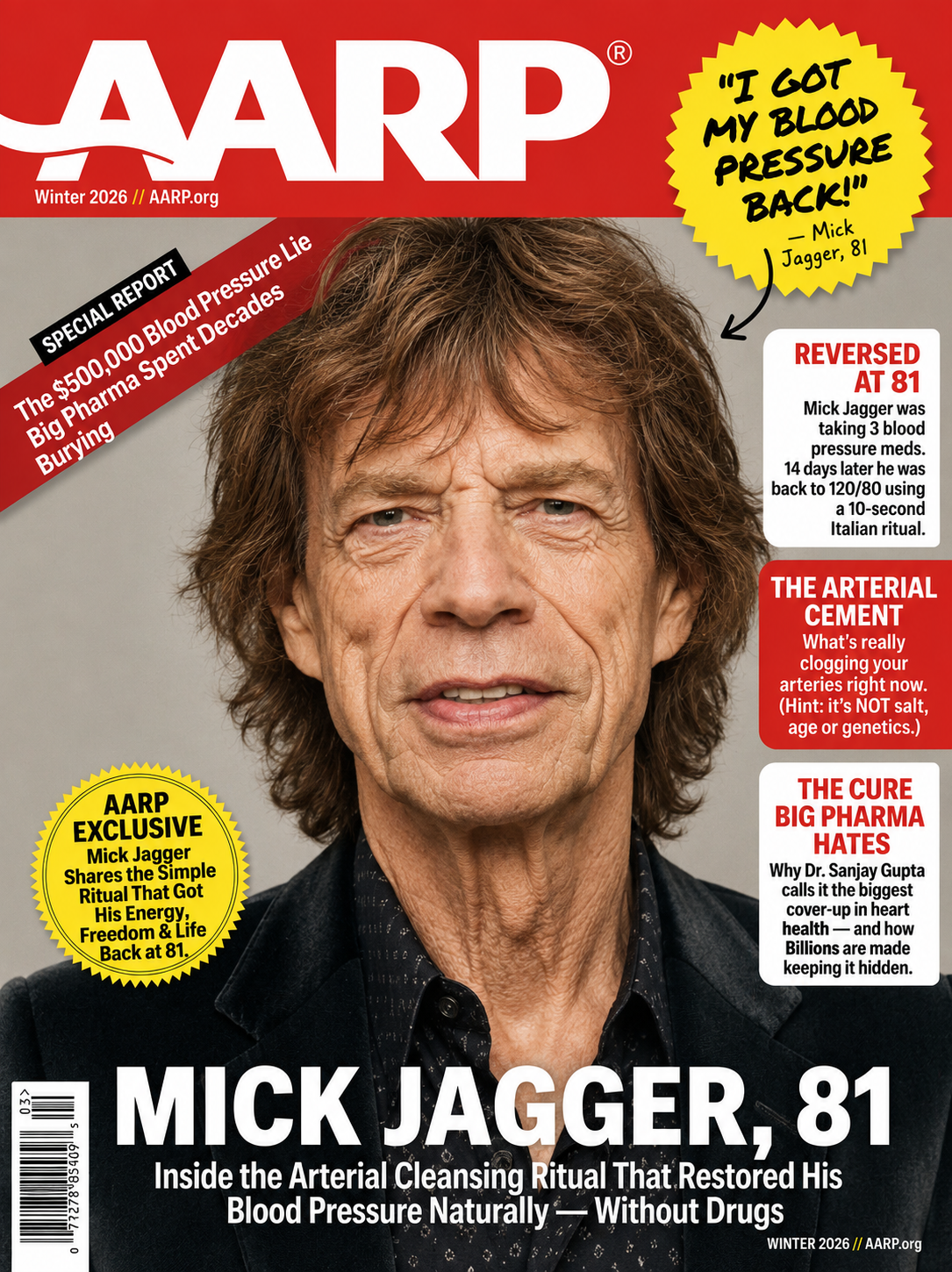
But the case that truly brought this entire story to the attention of AARP readers did not involve a billionaire or a scientist. It involved a legendary 81-year-old rock star who agreed to speak with us under one condition: That his story would be told in his own words.
Mick Jagger: It started with small things. A headache every now and then. I got tired more quickly than I used to. Then, one morning, I felt such intense pressure in my chest that I had to stop everything I was doing. A few days later, my doctor called me in to talk. He looked at my test results and said my blood pressure was dangerously high. He explained that, at my age, it was unlikely to ever return to normal and that I would probably depend on medication for the rest of my life. I was 81 years old, and for the first time, I felt like my own body was no longer under my control. That's when my daughter, Karis Jagger, found the ritual developed by Dr. Gupta. Just a few weeks later, something began to change. The headaches disappeared. My blood pressure started to come down. I was able to walk again without having to stop every few minutes. I slept through the night. I climbed stairs without feeling that constant tightness in my chest. At 81 years old, I feel more energetic than I did at 50. I got my peace of mind back. I got my independence back. I got my life back.